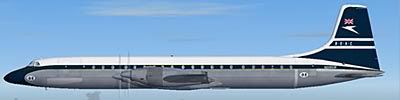
The VSI on a VC10 is calibrated to +/- 6000fpm. I wonder if it's possible to bend the needle You can bet not many minutes passed before 6000ft came up on the altimeter
No.. though PeterM might have achieved that rolling inverted straight after takeoff going into the climb
That said.. I wouldn't be surprised if the VC10 could, if necessary, descend at -6000fpm.. in fact the more I think about it.. the more I seem to remember this being mentioned at some point over the last god knows how many years Peter could have done it in a T3 too
The Trident was cleared for rapid descent using reverse in the air but it was rarely done as it was a bit hairy
I suppose any amount of descent is possible as long as speed in not exceeded and the pul;l out is nice and gntle but it would be interesting to know just how far operations kept the frames away from the true limits.
I remember a Brymon Dash Seven pilot describing Plymouth's runways as being rather long for the type or would be if they let them do what they knew it could do
Garry
"In the world of virtual reality things are not always what they seem."
Yes indeed. I guess the secret is to descend in as flat an attitude as possible rather than a balls-out 180deg job (which would be hairy for all concerned) Reduce the airspeed to safe gear operating levels.. drop the gear and fall out of the sky. I'm sure this can be done and I hope Tonks will see this and confirm (or otherwise) what emergency rate can be achieved
BTW.. I have this happen to me all the time in the PSS Concorde.. without trying too!
Fortunately, bent VSI needles in Tonks case isn't a problem as the military jets have digital VSI/TCAS (many of them anyway).. a requirement for using many countries airspace these days. It was probably cheaper to replace the old ILVSI units with digital ones than source new/replacement ILVSI needles
 You can bet not many minutes passed before 6000ft came up on the altimeter