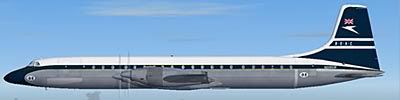
It did and indeed it does So does the C1K I don't know off the top of my head (can't remember) if the reason the 380 couldn't transfer was due to damage from the engine letting go but fin tanks are nothing new I believe Airbus revisited the VC10 spec on a number of occassions.. not least of all for the main gear which didn't work on their original 380 spec
I'll try and track down the photos a engineering friend of mine posted on facebook --- AMONGST the damage are some seriously frightening shots of damage done to the slat motors and drive shafts which are FORWARD of where the turbine wheel supposedly disintergrated.
What is very obvious besides the engine damage is that he had lost the slat slew motor and drive from the point of impact outboard -- and he also lost his bleed air AI duct from the same point --I would be interested in how much internal damage under the skin there was.
Leif
Oh yes courtesy of a very good friend who just happens to work for FlyTexas's company
It did and indeed it does So does the C1K I don't know off the top of my head (can't remember) if the reason the 380 couldn't transfer was due to damage from the engine letting go but fin tanks are nothing new
I'm very interested in how many aircraft have/had fin tanks. To me (even on a T-tail aircraft like the VC-10) it seems to be a somewhat complex place to put a fuel tank with a liquid that can shift quite a lot and isn't exactly "light" even though it is lighter than AVGAS or water, thus requiring the fin to be stiffened for those loads. The wings, and horizontal stabilizer offset much of the problems of carrying fuel because they create lift, but a fin doesn't, so there's no natural dampening for the fluid inside.

 So does the C1K
  I believe Airbus revisited the VC10 spec on a number of occassions.. not least of all for the main gear which didn't work on their original 380 spec