Thanks for the further input chaps - no I hadn't noticed I am a "Victor"!
Leif - I'm not sure if there is some confusion - if you travelled past Radlett airfield you wouldn't have gone to Harrow & Wealdstone as they are on different lines but there are (or were) plenty of large engine depots on both lines.
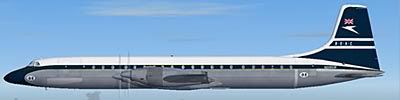
Given the interest, here is another view - albeit of even lesser quality as it is even more zoomed in - of this good fellow making his grand departure. I get the impression his "full English" awaits him at wherever he is going . . .

Some further titbits from my memories and from recollections of other staff I worked with.
On the picture you can see the truncated trackbed of an old branch line which served Sylvester's Farm. This line was obliterated by the runway extension for larger aircraft in World War II. I cannot find the farm on any map so I assume the farm was obliterated too.
During the Second World War, an aircraft missed the runway and crashed on the railway line south of the signal box. With the essential need to reopen the railway quickly, a good proportion of the aircraft was buried by filling in the pit it had made. I would assume these bits remain there today - something for the future industrial archaeologist to discover!
We had an alarm bel and telephone to the Control Tower for such emergencies.
After closure of the airfield it was used heavily for vehicle storage. London Transport had a load of not very old but pretty useless buses that were stored there by the hundred awaiting buyers. I could just see them as dots because they were at the far end, but a friend who worked for LT said that when a batch had been delivered the favourite game was to race about ten, side by side, down the runway. He said he for ever will remember a noisy departure and clouds of smoke . . . ten would disappear in a dip but only nine would come up the other side! The dead one would later be pushed roughly back to its parking spots by one of the others and nobody would say a thing.
There was also a firm there that sold much older double-deckers to the USA, but I never saw any of their activities.
At my end of the runway, imported cars were stored in quantity - Toyotas, I think. Many didn't move for 18 months and I wondered how many people would not be so proud of their new toy if they new it had stood in the open for so long.
These days there is an industrial estate where Handley Page's buildings would have been but most of the airfield seems untouched although the runway is disappearing under grass. I have been into that estate on business but there are no buildings there there that look at all airfield-related to me.
Hope this hasn't bored you.
John