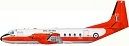
 (Correct term: 'Anhedral'.)
A400 v VC10
Moderators: Guru's, The Ministry
Re: A400 v VC10
Should have modelled it on the (lovely) Belfast. Why do all T-tailed high wingers (apart from the odd turboprop) have bloody droopy wings!!! (Correct term: 'Anhedral'.)
(Correct term: 'Anhedral'.)

Re: A400 v VC10
Its by design as the T tails have a tendency to dutch roll and the "droopy wings" counter the effect, same as the 146 etc. Actually, maybe it was the droopy wings that have a tendency to dutch roll and the T tail counters that (can't remember) but you get the idea 
Ben.

-
DaveB
- The Ministry
- Posts: 30457
- Joined: 17 Jun 2004, 20:46
- Location: Pelsall, West Mids, UK
- Contact:
Re: A400 v VC10

Nice explanation Ben. I couldn't say one way or the other but.. the VC10 is a T-tail, it doesn't have anhedral wings and will dutch roll. That said, it's low wing. The 146 is high wing/T-tail/anhedral but does it suffer dutch roll?
 The answer is out there!
 ATB
DaveB

Old sailors never die.. they just smell that way!
Re: A400 v VC10
Its high wing and T tail aircraft that are more likely to exhibit the characteristics, The anhedral counteracts that affect. It doesn't stop it from happening, it just reduces the effect from the high wing or T tail which may be implimented for other aerodynamic or design reasons.... There was a great explaination with diagrams I read a few years ago, but buggered if i can find it
Ben.
-
DaveB
- The Ministry
- Posts: 30457
- Joined: 17 Jun 2004, 20:46
- Location: Pelsall, West Mids, UK
- Contact:
Re: A400 v VC10
If you say it's so mate.. I'll believe it and in any case, I'm in no position to argue
Now.. the hard part (for me that is) is remembering it! 
ATB
DaveB
Old sailors never die.. they just smell that way!
-
Motormouse

- Concorde

- Posts: 1347
- Joined: 09 Sep 2004, 22:03
- Location: In a Hangar
Re: A400 v VC10
Dutch roll is characteristic of aircraft with stronger lateral stability than directional stability.Ben Watson wrote:Its high wing and T tail aircraft that are more likely to exhibit the characteristics, The anhedral counteracts that affect. It doesn't stop it from happening, it just reduces the effect from the high wing or T tail which may be implimented for other aerodynamic or design reasons.... There was a great explaination with diagrams I read a few years ago, but buggered if i can find it
If the aircraft encounters a disturbance causing yaw (the pilot can do this by pushing a rudder pedal), the outer, faster travelling wing will rise due to lift increase, much more markedly so if a swept wing. There is no significant change in wing angle of attack, but as the yaw continues, the 'weak' fin encounters an increasing angle of attack, and returns the aircraft towards normal, but causing greater lift on the opposite wing, causing a reversal in roll direction as the aircraft commences a yaw in the opposite direction....until the fin encounters an increased angle of attack from the opposite direction, and returns to normal, overshoots into another yaw in the original direction, and so it goes on.
Some aircraft will self correct after a few oscillations, whilst others become more and more divergant to the point of structural failure.
now then....a high wing aeroplane has more natural lateral stability (because most of the weight is below the wing)..so adding anhedral (which de-stabilises)
makes the aeroplane more neutral
hope this helps
ttfn
Pete
An Elephant is a Mouse designed to
a government specification.
a government specification.
-
DaveB
- The Ministry
- Posts: 30457
- Joined: 17 Jun 2004, 20:46
- Location: Pelsall, West Mids, UK
- Contact:
Re: A400 v VC10
Ooo.. I liked that Pete  Tks for the explanation
ATB
DaveB
Tks for the explanation ATB
DaveB
Old sailors never die.. they just smell that way!
-
Chris Trott
- Vintage Pair

- Posts: 2592
- Joined: 26 Jun 2004, 05:16
- Location: Houston, Texas, USA
- Contact:
Re: A400 v VC10
Tailplane position typically has more to do with wing position than anything. Typically, you place the tail "up high" on a high wing aircraft or "down low" to ensure the tailplane does not enter the "shadow" of the wing during high angle of attack situations (while the wing is still "flying, not considering stall characteristics). The Antonov 124 is the main exception to this but it's sheer size works to its advantage in this respect and its higher anhedral than the similar-sized C-5 doesn't hurt either.
Aircraft with tail ramps also tend to have high set tails to help "declutter" that area of structural members and maximize the size of the tail opening.
Aircraft with tail ramps also tend to have high set tails to help "declutter" that area of structural members and maximize the size of the tail opening.
-
Hot_Charlie
- Concorde
- Posts: 1018
- Joined: 30 Jul 2004, 23:51
- Location: Bomber County
Re: A400 v VC10
There are certainly some similarities, and very much at the back.austerdriver wrote:I reckon the A400 looks similar to the C-17 Globemaster.
Charlie
[Intentionally Blank]
[Intentionally Blank]