
http://news.bbc.co.uk/1/hi/world/europe/7909683.stm
Hope everyone is ok
737 crash at Schipol
Moderators: Guru's, The Ministry
737 crash at Schipol
Ben.




Re: 737 crash at Schipol
Not all is well I'm afraid, 9 dead and at least 50 injured is the latest, this may change. It hit a field 2 miles before RWY 18R at SPL, note that on the graphic on the BBC page the 18R-36L runway isn't shown.
Due to shortages and cutbacks the light at the end of the tunnel has been switched off.
------------
A Little VC10derness - http://www.VC10.net - Visit the Forum!
------------
A Little VC10derness - http://www.VC10.net - Visit the Forum!
-
WhisperJet

- Concorde

- Posts: 912
- Joined: 18 Nov 2008, 14:33
- Location: LOWW
Re: 737 crash at Schipol
Kind of sounds like Heathrow II, huh?
Even if that was a 737. But right after two TripleSevens...
I wonder if there's any specific Boeing Trouble to be figured out...
However the lack of fire could also be an indication for lack of fuel...
RIP to those who died.
Nick
Even if that was a 737. But right after two TripleSevens...
I wonder if there's any specific Boeing Trouble to be figured out...
However the lack of fire could also be an indication for lack of fuel...
RIP to those who died.
Nick
Noise Abatement? Never.
(D. Maltby)
(D. Maltby)

Re: 737 crash at Schipol
Sincere condolences to friends and families.
Just looked, and the figures given are 9 fatal, 84 injured - 6 critical.
Graham
Just looked, and the figures given are 9 fatal, 84 injured - 6 critical.
Graham

The early bird gets the worm, but the second mouse gets the cheese.

Re: 737 crash at Schipol
Looking at the photgraphs of the aircraft the cockpit appears to be reasonably intact yet all three (2 pilots and one trainee) sadly lost their lives!! :-(
Condolences to all families of those involved.
Nigel.
Condolences to all families of those involved.
Nigel.
I used to be an optimist but with age I am now a grumpy old pessimist.
-
Chris Trott
- Vintage Pair

- Posts: 2592
- Joined: 26 Jun 2004, 05:16
- Location: Houston, Texas, USA
- Contact:
Re: 737 crash at Schipol
Condolences to the families indeed.
Two things to note -
1) Turkish doesn't exactly have the greatest safety record.
2) There was little or no post-impact fire. 95% of the time, that means there was little or no fuel left. On a 737, the minimum FAA reserves mean that at least 3000 pounds of fuel should remain on the airplane when it parks at the gate. JAR reserves raises the figure to something like 4000 pounds (about an hour of cruise fuel).
It's very early to speculate for certain, but having seen quite a few accidents due to fuel exhaustion (in Civil Air Patrol we use actual photos of accidents taken from the air to help train on what to look for, and unfortunately a large portion of our actual missions are for aircraft that have crashed due to fuel exhaustion), that is something that will be certainly focused on.
BTW, with the 777's, this was a known issue (fuel icing) that operators had been warned about multiple times and had been heavily warned to be absolutely sure on their fuel freezing point prior to departure. In fact, the interesting thing is that on TV just Monday, they showed a program that was filmed in early 2001 and talked about what was then United Airlines brand new service from Chicago to Beijing. One of the things they showed was the sampling of the fuel and the process of finding the fuel's freezing point and radioing it to the crew so they could watch and manage the fuel temperature. So, it wasn't a design flaw by Boeing (despite what the initial reports want to imply), it was a failure in the process that should have been followed, something that was probably totally unintentional.
Two things to note -
1) Turkish doesn't exactly have the greatest safety record.
2) There was little or no post-impact fire. 95% of the time, that means there was little or no fuel left. On a 737, the minimum FAA reserves mean that at least 3000 pounds of fuel should remain on the airplane when it parks at the gate. JAR reserves raises the figure to something like 4000 pounds (about an hour of cruise fuel).
It's very early to speculate for certain, but having seen quite a few accidents due to fuel exhaustion (in Civil Air Patrol we use actual photos of accidents taken from the air to help train on what to look for, and unfortunately a large portion of our actual missions are for aircraft that have crashed due to fuel exhaustion), that is something that will be certainly focused on.
BTW, with the 777's, this was a known issue (fuel icing) that operators had been warned about multiple times and had been heavily warned to be absolutely sure on their fuel freezing point prior to departure. In fact, the interesting thing is that on TV just Monday, they showed a program that was filmed in early 2001 and talked about what was then United Airlines brand new service from Chicago to Beijing. One of the things they showed was the sampling of the fuel and the process of finding the fuel's freezing point and radioing it to the crew so they could watch and manage the fuel temperature. So, it wasn't a design flaw by Boeing (despite what the initial reports want to imply), it was a failure in the process that should have been followed, something that was probably totally unintentional.
-
Techy111
- Battle of Britain

- Posts: 3319
- Joined: 15 Aug 2007, 13:51
- Location: Coming out of Retirement.
Re: 737 crash at Schipol
Why is the triple 7 different to other A/C types....? is it a thinner tank...? How come the 747 never had a problem with fuel icing in its whole career...?
A/C regularly fly at the same altitudes so why is the 777 more prone to this...?
Anyone...?
Tony
A/C regularly fly at the same altitudes so why is the 777 more prone to this...?
Anyone...?
Tony
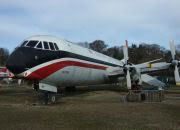
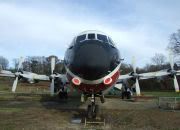
The last surviving and complete Vickers Vanguard....."Superb"
-
Chris Trott
- Vintage Pair
- Posts: 2592
- Joined: 26 Jun 2004, 05:16
- Location: Houston, Texas, USA
- Contact:
Re: 737 crash at Schipol
It's a problem with all aircraft. On aircraft where fuel icing is a major issue (such as on the 747 or the DC-9 family for example), fuel heaters are installed. Sometimes these heaters are installed in the fuel inlet to the fuel supply lines from the tanks (747, most British Jets and turboprops) and sometimes on the tank itself in the form of a heater blanket (DC-9). Because the 777 uses sponges in the tanks to minimize fuel sloshing, neither form of fuel temperature control is practical. However, Boeing used several methods to alleviate problems. However, when you are dealing with unusually cold temperatures (such as the Polar Route taken by the UAL Chicago-China route) or the route taken by the BA 777, awareness of fuel freezing point is critical. Usually, the aircraft will only have to descend a few thousand feet to warm the tanks sufficiently, however there are occasions when diversions are required due to extremely cold temperature conditions, even by aircraft which are equipped with fuel heaters.
If you look at the manual for the DC-10, there are warnings as the aircraft isn't equipped with fuel heaters. The 747 has a note about what to do if the fuel heaters don't give a sufficient increase in temperature in a certain amount of time. All aircraft deal with the issue differently, but it all comes down to the need by the operator to adhere to the procedures developed by the manufacturer.
If you look at the manual for the DC-10, there are warnings as the aircraft isn't equipped with fuel heaters. The 747 has a note about what to do if the fuel heaters don't give a sufficient increase in temperature in a certain amount of time. All aircraft deal with the issue differently, but it all comes down to the need by the operator to adhere to the procedures developed by the manufacturer.
-
Techy111
- Battle of Britain
- Posts: 3319
- Joined: 15 Aug 2007, 13:51
- Location: Coming out of Retirement.
Re: 737 crash at Schipol
Chris....thanks for the reply...i appreciate that mate....I was an A/C refueller in the RAF and this stuff aways fascinates me...and slightly off my topic , isn't that is what supposedly brought down TWA800 B747.....The fuel tank heaters caused an explosion...?
Tony
Tony
The last surviving and complete Vickers Vanguard....."Superb"